
What event based really means
Event based notifications are triggered by specific user actions inside a product. These actions can include signing up, completing a step, clicking a feature, or reaching a usage threshold.
Unlike time based messages, they are contextual and reactive. They appear because something meaningful happened. This makes them feel relevant rather than intrusive.
Why timing is more important than frequency
Many teams focus on how many notifications they send instead of when they send them. Frequency without context creates fatigue and disengagement. Event based systems prioritize precision over volume.
A single well timed message can outperform multiple generic reminders. The key is to intervene exactly when guidance is needed.
Mapping events to user intent
Not all events carry the same weight. Some signal curiosity, others signal friction, and some indicate readiness to upgrade or invite teammates. Effective teams map product events to clear behavioral intent.
This allows notifications to support progression rather than interrupt flow. When event mapping is done correctly, the product feels responsive and intelligent.
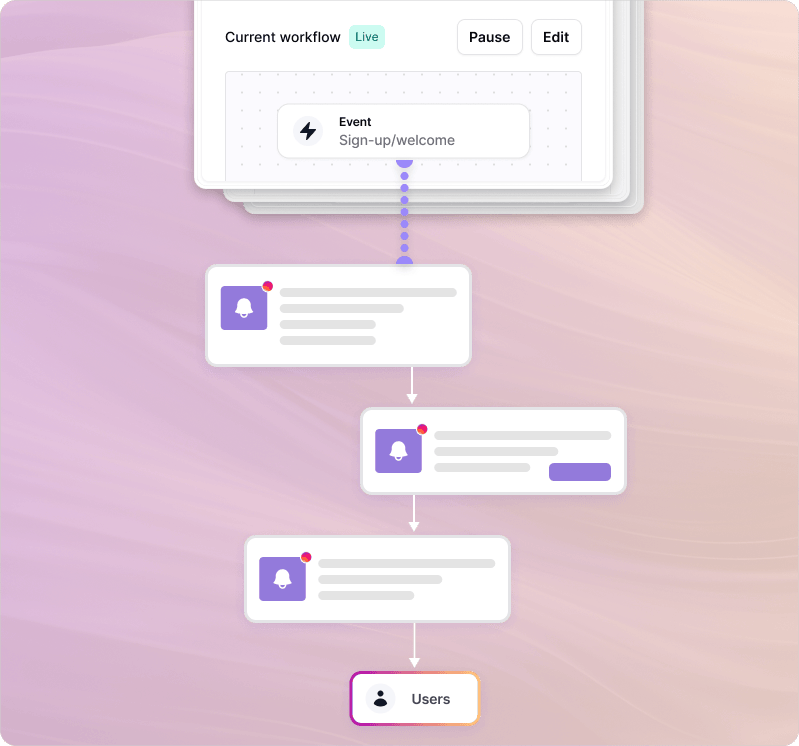
Designing clear triggers and ownership
An event alone is not enough. Each notification should have a clearly defined trigger, audience, objective, and owner. Without structure, event based systems quickly become complex and hard to audit.
Teams need visibility into what triggers what, and why. Clarity at the system level prevents accidental overlaps and contradictions.
Avoiding the hidden complexity trap
Event based notifications can become difficult to manage as products grow. New features introduce new triggers, and experiments multiply variants.
Without versioning and review processes, teams lose track of what is live. Complexity then turns into risk. A structured workflow ensures that changes are safe and intentional.
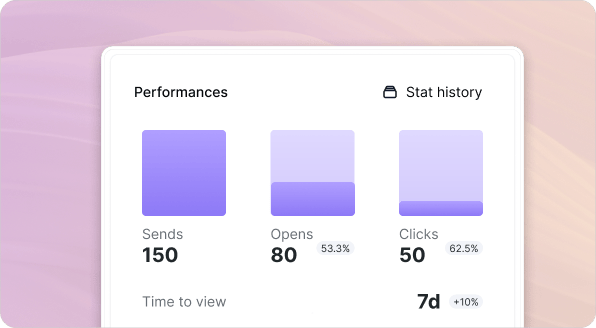
Measuring impact and iterating safely
The goal of event based notifications is not activity, but outcome. Teams should measure how each trigger influences activation, retention, or conversion.
Small adjustments in timing, copy, or targeting can significantly change results. Safe preview and review processes allow experimentation without breaking production.
Continuous iteration turns event based messaging into a sustainable growth engine.

