
Publishing is a product decision, not a technical step
When a notification goes live, it changes the product experience instantly. It influences behavior, perception, and sometimes revenue. Yet publishing is often treated as a minor operational action.
A developer deploys it, or a marketer clicks send. In reality, every live notification is a product decision that deserves clarity and ownership.
Intention starts with a clear objective
Before publishing, teams should answer a simple question: what outcome are we trying to influence? Activation, retention, upgrade, education, or reassurance all require different messaging approaches.
Without a defined objective, notifications become reactive rather than strategic. Intent transforms a message from information into guidance. Clarity of purpose prevents unnecessary noise.
Visibility creates accountability
Publishing with intention requires knowing exactly what is already live. Teams should be able to review active notifications in seconds.
Without visibility, messages overlap or contradict each other. Accountability emerges when every notification has a status and an owner. Transparency inside the team protects coherence for users.

Safe review before going live
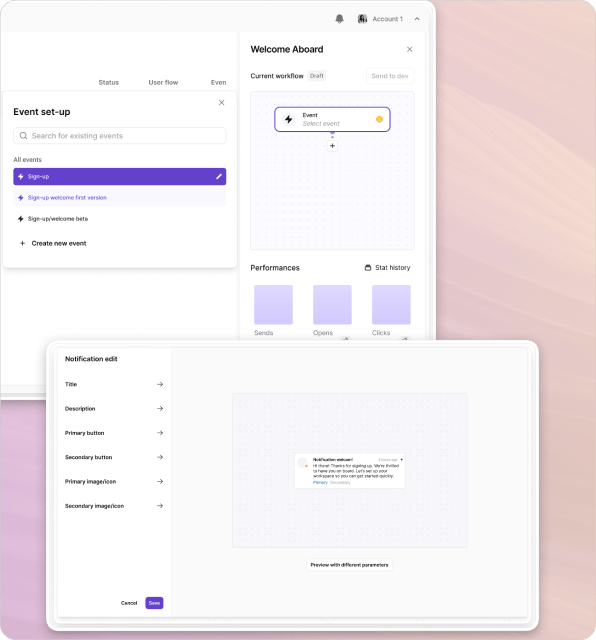
Intentional publishing includes structured review processes. Draft states, preview environments, and controlled promotion to live reduce risk. Instead of editing messages directly in production, teams validate copy and triggers beforehand.
This discipline prevents accidental errors or misaligned campaigns. A safe workflow increases confidence across marketing, product, and engineering.
Avoiding accidental complexity
Over time, unreviewed publications create hidden complexity. Old experiments remain active, duplicate triggers appear, and no one remembers why certain messages exist.
Publishing with intention means regularly auditing relevance and removing what no longer serves users. Simplicity is maintained through deliberate control. What is not intentional eventually becomes accidental.
From shipping fast to shipping consciously
Speed matters in growth, but speed without structure creates long term friction. Publishing consciously does not slow teams down; it aligns them. When objectives, triggers, and ownership are explicit, execution becomes smoother.
Intentional systems enable sustainable iteration. In the long run, thoughtful publishing outperforms impulsive shipping.

