
Activation happens in the first critical moments
Activation is not about features, it is about momentum. The first minutes inside your product determine whether users move forward or leave silently. At this stage, clarity matters more than completeness.
Users need guidance that reduces uncertainty and highlights the next logical step. Well designed in-app notifications can create that momentum. Poorly timed ones can interrupt it and slow everything down.
Trigger guidance based on real user behavior
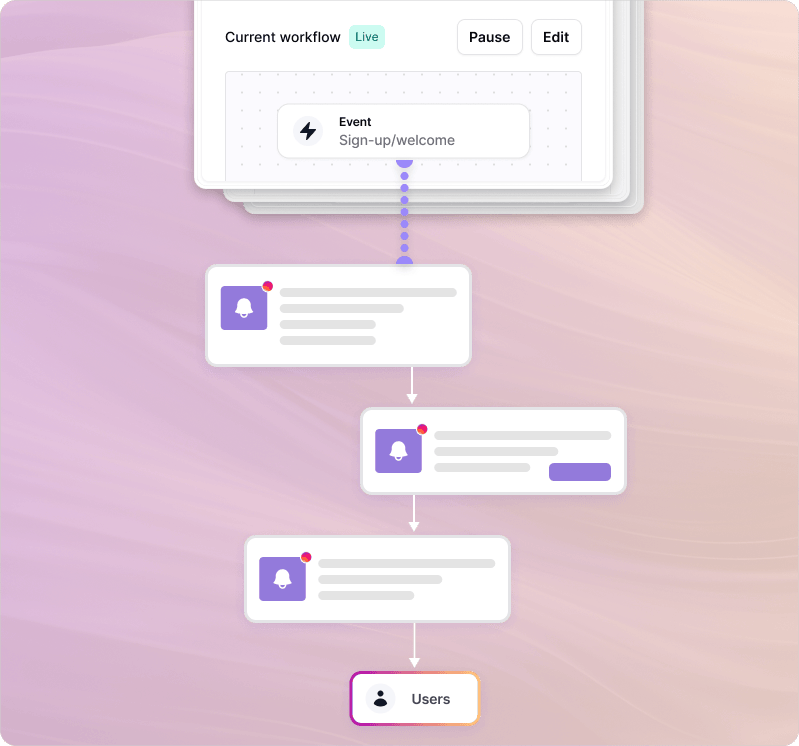
The most effective notifications are event based, not time based. They react to what users actually do inside the product rather than following a fixed schedule. When a user completes an action, hesitates, or skips a step, a contextual notification can guide them forward.
This makes the experience feel responsive instead of scripted. Activation improves when users feel the product adapts to them.
Reduce friction at decision points
Every onboarding flow contains micro decision points. Should I connect my data? Invite a teammate? Configure settings now or later? In-app notifications can reduce hesitation by clarifying value at the exact moment doubt appears.
Instead of overwhelming users with long tutorials, you provide focused nudges. Removing small moments of friction often has a measurable impact on activation rates.
Make progress visible and rewarding
Activation increases when users see progress clearly. Notifications can reinforce milestones such as completing a setup step or unlocking a feature. These small confirmations create a sense of advancement and competence.
When users understand how far they have come, they are more likely to continue. Structured feedback loops transform passive usage into active progression.
Align growth, product, and engineering
Improving activation is not just a messaging problem, it is a coordination challenge. Growth teams define goals, product teams shape the experience, and engineering controls implementation.
Without alignment, notifications become inconsistent or disconnected from actual product logic. A structured approach ensures every message has a clear trigger, owner, and objective. Internal clarity directly strengthens activation performance.
Measure, iterate, and refine intentionally
Activation optimization is an ongoing process, not a one time setup. Teams should regularly review which notifications are live, why they exist, and how they perform. Small adjustments in wording, timing, or targeting can create meaningful gains.
The key is to test safely without disrupting the live experience. When notifications are managed intentionally, they become a reliable growth lever rather than a source of noise.

