Revenue notifications are among the most sensitive communications in your SaaS platform. Get them wrong, and you risk damaging customer relationships. Get them right, and they become a crucial part of your growth engine.
Unlike product activation or engagement notifications, revenue communications directly impact your bottom line and customer trust. They need to be precise, contextual, and respectful of user attention. Most importantly, they need to stop at the right moment.
Notifizz approaches revenue notifications through fresh business context and goal-aware campaigns that automatically stop when objectives are achieved, preventing unnecessary follow-ups that can damage customer relationships.
The challenge with traditional revenue notifications
Most revenue notification systems suffer from two fundamental problems: stale data and campaign blindness.
With stale data, your dunning emails might continue sending after a payment has been processed, or upsell campaigns might target users who already upgraded. This creates frustration and signals that your system isn't aware of real-time business changes.
Campaign blindness means notifications continue running regardless of whether their objective has been achieved. A user pays their overdue invoice, but the payment reminder sequence keeps going. A user upgrades to a higher plan, but the upsell campaign doesn't stop.
These problems compound in revenue communications because the stakes are higher. An irrelevant activation email is annoying. An irrelevant billing email can damage trust and create support burden.
Fresh business context for revenue decisions
Effective revenue notifications require access to current business context at the moment of execution. This means checking payment status, subscription state, usage patterns, and account health in real-time, not relying on yesterday's sync.
Notifizz handles this through enrichers that bring live business context into revenue campaigns without requiring heavy upfront data modeling. When a payment fails or usage approaches limits, enrichers can add the specific context needed for relevant messaging.
For example, an overdue payment event might trigger a campaign, but enrichers ensure the notification includes current invoice details, payment method status, and account standing. If the payment processes before the next step executes, that context is available immediately.
This approach keeps revenue notifications grounded in current business reality rather than assumptions based on historical data.
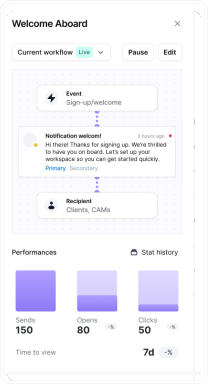
Goal-aware campaigns that stop when objectives are reached
Revenue campaigns should stop immediately when their objective is achieved. A user who pays their overdue invoice shouldn't receive the next dunning reminder. A user who upgrades shouldn't continue receiving upsell messages.
Notifizz campaigns include goal logic that removes users from the eligible recipient set as soon as the campaign objective is reached. When a payment.successful event fires, users are automatically removed from active dunning campaigns. When an upgrade event occurs, users exit upsell sequences.
This prevents the most common revenue notification mistakes: continuing to ask for actions that have already been taken. It also reduces notification pressure and keeps communication relevant.
The goal isn't just to stop sending messages. The goal is to maintain campaign coherence with actual business progress, so revenue communications stay helpful rather than becoming noise.
Payment recovery patterns that preserve relationships
Dunning notifications require careful balance between persistence and respect. Too aggressive, and you damage customer relationships. Too passive, and you lose recoverable revenue.
Effective payment recovery follows the failed payment event with contextual reminders that provide clear next steps. The first notification should be informational: payment failed, here's how to update your payment method, here's your current account status.
Subsequent notifications can escalate in urgency while remaining helpful. Include specific invoice details, multiple payment options, and clear timelines. Use Notifizz's category separation to ensure these transactional notifications maintain strong deliverability.
Most importantly, use goal logic to stop the sequence immediately when payment succeeds. This prevents the common scenario where customers pay but continue receiving dunning emails, creating unnecessary friction and support requests.
Contextual upsell notifications that feel helpful
Upsell notifications work best when they're triggered by actual usage patterns rather than arbitrary timing. A user approaching their plan limits, activating advanced features, or showing increased engagement signals genuine upgrade readiness.
Use enrichers to include specific usage context in upsell messages. Instead of generic "upgrade now" messaging, show current usage against plan limits, highlight specific features they're approaching, or reference their recent activity patterns.
The notification should feel like helpful information rather than a sales pitch. "You've used 85% of your monthly API calls" with upgrade options is more effective than "Upgrade to our Pro plan for more features."
Again, goal logic ensures upsell campaigns stop immediately when users upgrade, preventing continued promotional messaging to customers who have already converted.
Multi-channel strategy for revenue communications
Revenue notifications often benefit from multi-channel delivery because of their time-sensitive nature. In-app notifications work well for usage-based upsells, email for payment recovery, and SMS for urgent account status changes.
Notifizz supports channel strategy at the campaign level, allowing you to route different revenue scenarios through appropriate channels. Transactional notifications like payment failures can use email for reliable delivery, while feature-based upsells might start in-app and escalate to email if not acknowledged.
The key is matching channel choice to message urgency and user context. A payment due tomorrow warrants email. A soft limit approaching might start with in-app notification.
Consider notification pressure across channels to avoid overwhelming users with revenue messaging while ensuring critical communications reach their intended recipients.
Making revenue notifications work for your business
Revenue notifications require different treatment than engagement or activation campaigns because they directly impact customer trust and cash flow. The combination of fresh business context and goal-aware stopping logic helps ensure these communications remain helpful rather than becoming relationship damage.
Start with clear event triggers tied to actual revenue moments: payment failures, usage limit approaches, subscription state changes. Use enrichers to add specific business context that makes notifications relevant and actionable. Implement goal logic to stop campaigns immediately when objectives are achieved.
Most importantly, review revenue notifications carefully before launch using Notifizz's notification review space. These messages represent your company's approach to customer relationships during sensitive moments. They should feel helpful, informed, and respectful of the customer's current situation.

